| Anmol Chemicals is the pioneer manufacturers of Sodium Thiosulfate, Pharmaceutical Excipients Fragrance & Flavor chemicals in India. We offer Halal and Kosher Sodium Thiosulphate made in an ISO9001, ISO22000 (FSSC22000), cGMP and GLP certified facility. Our group has several manufacturing facilities spread across the world, supported by toll manufacturers and representatives in UAE, Europe, Africa, USA, China and has several associated manufacturing facilities spread across India. All the Information on Physics, Chemistry, Applications, Uses and Technology on Manufacture of Sodium Thiosulfate is in these pages. |
| The units have one or more of the certifications like FDA GMP, ISO 9001, ISO 22000, HACCP, REACH, Kosher & Halal |
 ----------
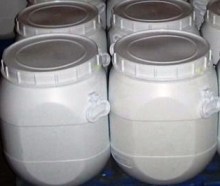
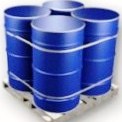
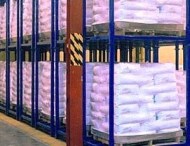
Sodium Thiosulfate Sodium Thiosulphate Pentahydrate Anhydrous Manufacturers
Italian Produttori di tiosolfato di sodio
Arabic مصنعي ثيوسلفات الصوديوم
English Sodium Thiosulfate Manufacturers
Dutch Fabrikanten van natriumthiosulfaat
French Fabricants de thiosulfate de sodium
German Hersteller von Natriumthiosulfat
Spanish Tiosulfato de sodio Fabricantes
Portugeuse Fabricantes de tiossulfato de sódio
Hypo, Sodium Thiosulfate
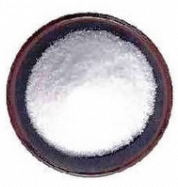
Sodium thiosulfate thiosulphate anhydrous powder
Sodium thiosulfate thiosulphate pentahydrate crystals
Sodium Thiosulphate BP ACS AR Analytical Reagent
Sodium Thiosulfate USP FCC ACS AR Analytical Reagent
MSDS of Sodium Thiosulphate Thiosulfate Anhydrous Manufacturers
MSDS of Hypo, Sodium Thiosulfate Thiosulphate Pentahydrate Manufacturers
Sodium Thiosulfate BP Ph Eur USP IP ACS Analytical Reagent FCC Food Grade Manufacturers
Sodium Thiosulphate
Sodium Thiosulfate Commercial & Pure P Crystals, Pea Crystal Pentahydrate Anhydrous
IP BP Ph. Eur. USP ACS AR LR FCC Food
ITC-HSN Code: 2832 30 10
CAS 10102-17-7 (7772-98-7 Anhydrous)
Formula Na2S2O3.5H2O
Molecular Weight 248
Appearance White Crystalline
Sodium Thiosulphate Pure
| Parameters | Specifications |
| Appearance | White Uniform Crystals (10 mesh) |
| pH of 10% Aqueous Solution | 6.5 to 8 |
| Assay | 99% minimum |
| Sulphites & Sulphates | 0.2% max |
| Heavy Metals | Less than 5 ppm |
| Iron | Less than 10 ppm |
Sodium Thio Sulphate Photographic P4 & P8
| Parameters | Specifications |
| Appearance | Cylindrical Pellets (5 mm to 10 mm for P4) & (2 mm to 5 mm for P8) |
| pH of 10% Aqueous Solution | 6.5 to 8 |
| Assay | 99.5% minimum |
| Sulphites & Sulphates | 0.2% max |
| Heavy Metals | Less than 3 ppm |
| Iron | Less than 5 ppm |
We can give both the grades Pentahydrate and Anhydrous. We can give the technical grade small crystals and large crystals too.
Sodium Thiosulfate Anhydrous of similar specifications is offered
Sodium Thiosulphate Anhydrous Specifications
| Formula | (Na2) S2O3 |
| Molecular Weight | 158 |
| Assay as (Na2)S2O3 | 98 % Min. |
| 10% solution in water | Clear |
| Description | White powder free from foreign particles. |
| pH of 10 % Solution | 6.5 To 8.5 |
| Sulphites & Sulphates | 0.5% maximum |
| Iron | Less than 10 ppm |
| Heavy Metals | Less than 10 ppm |
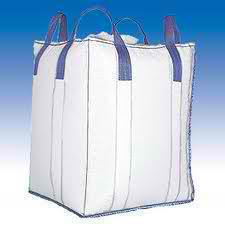
| Standard Packing | 25 Kg. / 50 Kg/55lbs. HDPE Bag with extra liner inside or in Jumbo bags or as required by the buyer. |
We offer Sodium Thiosulphate BP Ph Eur, IP, Sodium Thiosulfate USP FCC & Extra Pure from our world class FDA approved, ISO-9001-2008, ISO-22000 HACCP Certified facility, Anmol Chemicals
Sodium thiosulfate (Na2S2O3), also spelled Sodium thiosulphate, or thio sulphate is a colorless crystalline compound that is more familiar as the pentahydrate, Na2S2O3•5H2O. Sodium thiosulfate or Sodium thiosulphate is an efflorescent, monoclinic crystalline substance also called sodium hyposulfite or “hypo”.
The thiosulfate anion is tetrahedral in shape and is notionally derived by replacing one of the oxygen atoms by a sulfur atom in a sulfate anion. The S-S distance indicates a single bond, implying that the sulfur bears significant negative charge and the S-O interactions have more double bond character. The first protonation of thiosulphate occurs at sulfur.
Thiosulfate anion characteristically reacts with dilute acids to produce sulfur, sulfur dioxide and water
Na2S2O3 + 2HCl → 2NaCl + S + SO2 + H2O
This reaction is known as a clock reaction, because when the sulfur reaches a certain concentration the solution turns from colourless to a pale yellow. This reaction has been employed to generate colloidal sulfur. When the protonation is conducted at low temperatures, H2S2O3 (thiosulfuric acid) can be obtained. It is a strong acid pKa
Iodometry
In analytical chemistry, the most important use comes from the fact that the thiosulphate anion reacts stoichiometrically with iodine, reducing it to iodide as it is oxidized to tetrathionate:
2 S2O32−(aq) + I2(aq) → S4O62−(aq) + 2 I−(aq)
Due to the quantitative nature of this reaction, as well as the fact that Na2S2O3•5H2O has an excellent shelf-life, it is used as a titrant in iodometry. Na2S2O3•5H2O is also a component of iodine clock experiments.
This particular use can be set up to measure the oxygen content of water through a long series of reactions. It is also used in estimating volumetrically, the concentrations of certain compounds in solution (hydrogen peroxide, for instance), and in estimating the chlorine content in commercial bleaching powder and water.
Gold extraction
Sodium thiosulphate is one component of an alternative lixiviant to cyanide for extraction of gold. It forms a strong complex with gold I) ions, [Au(S2O3)2]3-. The advantage of this approach is that thiosulfate is essentially non-toxic and that ore types that are refractory to gold cyanidation (e.g. carbonaceous or Carlin type ores) can be leached by thiosulphate. Some problems with this alternative process include the high consumption of thiosulfate, and the lack of a suitable recovery technique, since [Au(S2O3)2]3- does not adsorb to activated carbon, which is the standard technique used in gold cyanidation to separate the gold complex from the ore slurry.
Analytical chemistry
Sodium thiosulphate is also used in analytical chemistry. It can, when heated with a sample containing aluminum cation, produce a white precipitation:
2Al3+ + 3S2O32- + 3H2O → 3SO2 + 3S + 2Al(OH)3
Medical
Sodium thiosulfate is used as an antidote to cyanide poisoning. Thiosulphate acts as a sulfur donor for the conversion for cyanide to thiocyanate (which can then be safely excreted in the urine, catalyzed by the enzyme rhodanase. It has also been used as treatment of calciphylaxis in hemodialysis patients with end-stage renal disease.
Other uses
Sodium thiosulphate is used as a component in hand warmers and other chemical heating pads that produce heat by exothermic crystallization of a super cooled solution.
Sodium thiosulfate is used in Bleach.
In pH testing of bleach substances.
To de-chlorinate tap water for aquariums or treat effluent from waste water treatments prior to release into rivers. The amount of Sodium thiosulfate or Sodium thiosulphate required can vary with the pH of the water. A range of approximately 2 to 7 parts sodium thiosulfate to neutralize one part chlorine is generally suggested. To neutralize 1 liter of a 200 ppm chlorine solution, approximately 0.4 - 1.4 grams of sodium thiosulfate would be required.
Sodium thiosulfate is used to lower chlorine levels in swimming pools and spas following super chlorination.
It is used to remove iodine stains, e.g. after the explosion of nitrogen triiodide.
Sodium thiosulphate is used in bacteriological water assessment.
It is used in the tanning of leather.
Melted sodium thiosulfate is very easy to overcool to room temperature and when crystallization is forced, the sudden temperature jump to 48.3°C can be experienced by touch. It is used in phase change material.
Sodium thiosulfate is used in paper industry.
It is used in medicine and as disinfectant. A low amount can be found in natural hot springs water, but they do have trace sodium sulfide too, which is why it can used to treat skin problems and some bathe in it to relieve them of skin problems, rheumatism, although indirectly.
It is systemically for cyanide or arsenic poisoning and topically as an antifungal.
It is used in electroplating. As part of patina recipes for copper alloys.
Often used in pharmaceutical preparations as an anionic surfactant to aid in dispersion.
We also offer Sodium Sulfate Anhydrous Decahydrate BP EP Ph Eur USP ACS Reagent FCC Food Grade.
Sodium Thiosulphate BP Sodium Thiosulfate USP pentahydrate anhydrous manufacturers:
Anmol Chemicals
S-8, SARIFA MANSION, 2ND FLANK ROAD, CHINCHBUNDER, MUMBAI 400009, INDIA
TEL: (OFFICE) 91-22-23770100, 23726950, 23774610, 23723564. FAX: 91-22-23728264
e-mail: anmolc@mtnl.net.in
Magnesium Chloride -- Magnesium Sulfate -- Manganese Chloride -- Manganese Sulfate -- Methylene Blue -- Potassium iodide -- Potassium nitrate Potassium nitrite -- Sodium sulfate -- Mono di ammonium phosphate -- Potassium acetate -- Potassium bromide -- Potassium phosphate monobasic dibasic tribasic -- Sodium Bicarbonate -- Sodium Borate -- Sodium Bromide -- Sodium Diacetate -- Sodium hexametaphosphate -- Sodium Hydroxide Pellets -- Sodium nitrite Sodium nitrate -- Sodium phosphate monobasic dibasic tribasic
Exports to USA, Canada, UAE, Dubai, South Africa, Tanzania, Kenya, Nigeria, Egypt, Uganda, Turkey, Mexico, Brazil, Chile, Argentina, Dubai, Europe Netherlands, Italy, Spain, Germany, Portugal, France, Malaysia, Indonesia, Thailand, Korea, Vietnam, Japan,etc.
Sodium Acetate --- Zinc Chloride --- Calcium Chloride --- Potassium Chloride --- Ammonium Chloride